


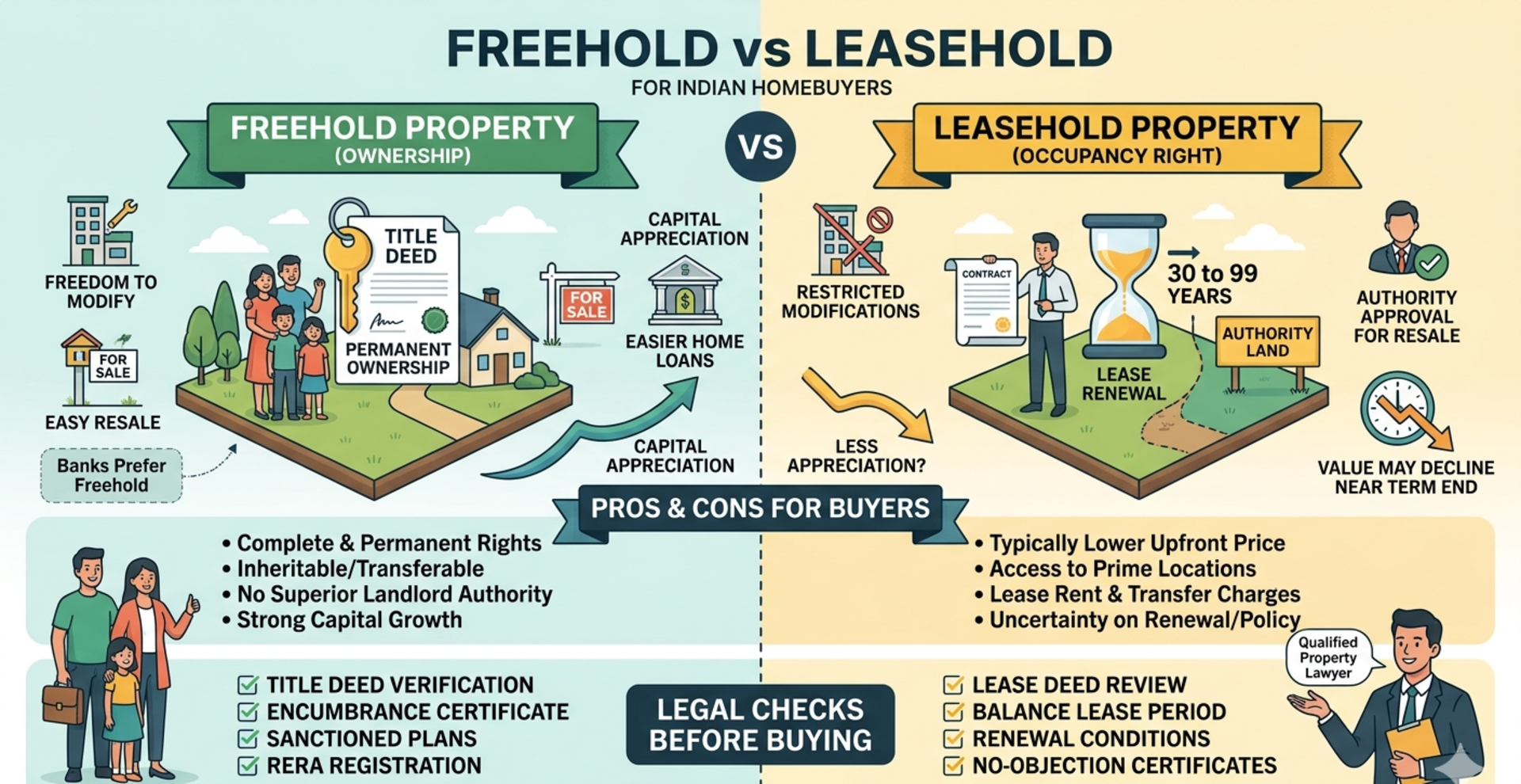
Freehold vs Leasehold Property: A Simple Guide for Indian Homebuyers When buying a home in India, many people compare price, location, and amenities but overlook one crucial factor: the type of property ownership. Understanding whether a property is freehold or leasehold can directly impact your legal security, resale value, and long-term returns. ## What Is a Freehold Property? A freehold property gives the owner complete and permanent rights over both the land and the structure built on it. - Ownership is not limited by time, and the property can be held, inherited, or transferred indefinitely subject to applicable laws. - Owners can generally sell, gift, or modify the property without needing approvals from any superior land-owning authority, as long as local building rules are followed. - Banks and financial institutions usually prefer freehold properties, making home loan approval smoother and faster. Freehold properties are widely seen as the safest form of real estate ownership for long-term homebuyers and investors. ## What Is a Leasehold Property? In a leasehold property, the buyer owns the building or the right to occupy it for a fixed period, while the underlying land belongs to another authority or owner. - Lease durations typically range from about 30 to 99 years, after which the lease has to be renewed to continue legal occupation. - The lessor may be a government body, development authority, or private entity that grants usage rights under specific conditions. - Buyers may need permission from the land-owning authority for resale, transfer, or major structural modifications. As the remaining lease tenure reduces, the market appeal and resale value of leasehold properties often decline. ## Pros and Cons for Buyers Both freehold and leasehold structures come with their own advantages and limitations, depending on your budget and time horizon. - Freehold benefits include long-term security, easier resale, better loan eligibility, and stronger potential for steady capital appreciation. - Leasehold properties can offer lower upfront prices or access to prime locations where freehold land is limited, which may suit certain buyers or shorter-term users. - However, leasehold purchases may involve lease rent, transfer charges, and uncertainties around future renewals or changes in policy. - From a pure investment standpoint, freehold assets tend to perform better over decades because they are not constrained by an expiry date on ownership. Investors must weigh the initial cost advantage of leasehold against possible challenges in resale, financing, and long-term control. ## When Leasehold Still Makes Sense Despite their limitations, leasehold properties can be practical in specific scenarios for both residential and commercial buyers. - Budget-conscious buyers may find leasehold homes more affordable in areas where freehold options are priced out of reach. - Certain commercial parks and institutional developments commonly operate on leasehold structures, which are accepted as an industry norm. - Short- to medium-term users who do not intend to hold the asset beyond a few years may still find value if lease terms are favourable. In all such cases, it is critical to understand the remaining lease tenure, renewal clauses, and restrictions before committing. ## Legal Checks Before You Decide Thorough legal due diligence is non-negotiable for both freehold and leasehold real estate transactions. - For freehold property, buyers should verify title deed, encumbrance certificate, sanctioned plans, and RERA registration wherever applicable. - For leasehold property, it is essential to examine the lease deed, balance lease period, renewal conditions, and any no-objection requirements for resale or construction. - Consulting a qualified property lawyer helps avoid hidden liabilities, disputes, or financial surprises later. Ultimately, the right ownership structure depends on your goals, budget, and time frame—but understanding the difference between freehold and leasehold is the first step toward a confident real estate decision.
Tags
#realestate#bangalore property
R
RealHubb Editorial Team
Real Estate Expert · RealHubb Ventures
RealHubb Editorial Team is a seasoned real estate advisor at RealHubb, dedicated to helping families find their dream homes in Bangalore, Hyderabad, and Chennai.