

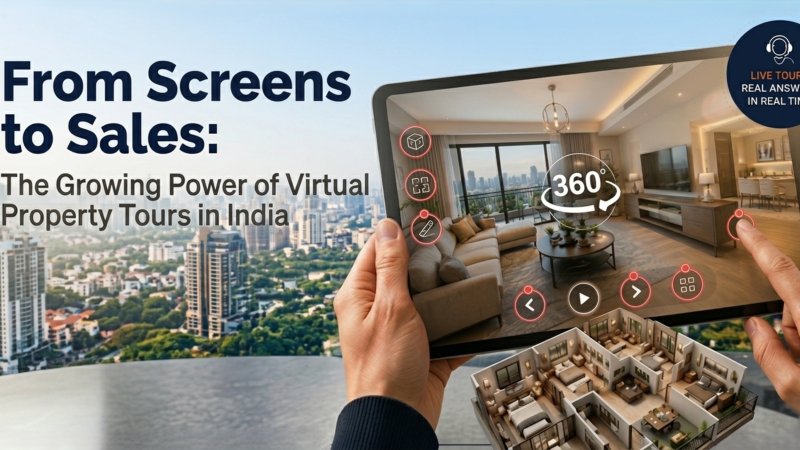
The way Indians buy homes has changed dramatically over the last few years. What once required endless site visits, long drives, and multiple meetings with brokers can now begin from the comfort of a sofa. Today, buyers can explore properties through a phone, tablet, or laptop without physically stepping inside the building. Virtual property tours are no longer just a modern add-on in real estate - they have become an important part of the buying process in India.
Imagine a family living in Dubai searching for a home in India. Earlier, they would either depend on relatives or travel back to India for weeks to inspect properties. Now, they can take detailed virtual tours, compare multiple flats online, interact with agents on live video calls, and shortlist serious options before booking a ticket. This shift is changing how both local buyers and NRIs approach Indian real estate.
What Is a Virtual Property Tour?
A virtual property tour is a digital way of exploring a property remotely. Instead of relying only on photos, buyers can experience the layout, movement, and structure of a home in a much more realistic way.
There are different types of virtual tours available in India today.
The most common format is the video walkthrough. Here, an agent records a walkthrough of the property while explaining details such as room size, ventilation, amenities, and interior finishes. These videos are simple to create and are now widely used across property listing platforms.
The second format is the 360-degree virtual tour. In this format, special cameras capture every angle of a room, allowing buyers to rotate the view and explore spaces interactively. This gives a more immersive feeling compared to regular videos.
The most advanced option is the 3D virtual property tour. Platforms such as Matterport create digital models of entire homes that buyers can navigate freely. Users can move from room to room, zoom into details, and even understand the exact floor layout. This technology is becoming increasingly popular in premium real estate projects across cities like Bengaluru, Mumbai, Hyderabad, and Chennai.
Another highly effective format is the live virtual tour. In this case, the agent walks through the property during a live video call while the buyer asks questions in real time. This approach creates transparency because buyers can request specific views, inspect corners, or ask to see surrounding areas instantly.
Why Virtual Tours Matter in India
India’s real estate market is unique because buyers are often located far away from the properties they want to purchase. NRIs invest heavily in Indian housing, and even domestic buyers frequently purchase homes in cities where they do not currently live.
Virtual property tours solve a major problem - distance.
A buyer in Chennai can evaluate apartments in Bengaluru without taking multiple trips. Someone living in Canada can explore a villa in Kerala while sitting thousands of kilometres away. This convenience saves both time and money.
The rise of remote work has also increased interest in properties outside one’s current city. Many professionals are now considering investment opportunities in Tier-2 cities and emerging residential hubs. Virtual tours make this exploration process significantly easier.
Developers have also recognised that modern buyers expect a strong digital experience. A project with high-quality virtual tours appears more trustworthy and professional than one with only static photographs. In competitive markets, digital presentation can strongly influence buyer interest.
Advantages of Virtual Property Tours
1. Better Understanding of Space
Photographs can often be misleading because they only show selected angles. A virtual tour helps buyers understand how rooms connect with each other and whether the layout suits their lifestyle.
For example, buyers can see whether the kitchen flows naturally into the dining area or whether the hallway feels too narrow. These details are difficult to judge through images alone.
2. Saves Time and Effort
Property hunting in India can be exhausting. Visiting multiple sites across traffic-heavy cities takes enormous time and energy. Virtual tours allow buyers to eliminate unsuitable properties early and focus only on serious options for physical visits.
This creates a more efficient buying process for both buyers and agents.
3. Helps NRIs Make Confident Decisions
For NRIs, virtual tours are especially valuable. Instead of relying entirely on relatives or brokers, buyers can inspect properties personally through digital tools. They gain more control and confidence before investing money.
4. Creates Emotional Connection
A well-designed virtual tour can help buyers imagine themselves living in the home. Furnished interiors, lighting, balconies, and room flow create emotional engagement that simple property photos cannot achieve.
This emotional connection often plays a major role in home-buying decisions.
5. Increased Transparency
Live virtual tours allow buyers to ask direct questions and inspect details in real time. This creates a stronger sense of trust compared to heavily edited marketing brochures.
Limitations of Virtual Property Tours
Despite their advantages, virtual tours are not perfect. Buyers should never rely on them completely when making a major investment.
1. They Cannot Capture Real-Life Experience
A virtual tour cannot show everything. Buyers cannot feel air circulation, smell dampness, hear surrounding traffic, or understand the actual noise level of the neighbourhood.
A property may look excellent online but feel entirely different during a physical visit.
2. Neighbourhood Quality Remains Unclear
The surrounding environment matters just as much as the apartment itself. Factors such as road conditions, nearby markets, safety, traffic congestion, and social atmosphere are difficult to judge through virtual tours.
3. Construction Quality Cannot Be Fully Verified
Digital tours cannot reveal structural issues, plumbing quality, leakage problems, or finishing defects. These aspects require physical inspection by experienced professionals.
4. Possibility of Misleading Presentation
Wide-angle cameras, selective editing, and professional lighting can make spaces appear larger and more attractive than they actually are. Buyers must remember that virtual tours are still part of a marketing strategy.
How Buyers Should Use Virtual Tours Smartly
Experienced buyers treat virtual property tours as a research tool rather than a final decision-maker.
The best approach is to use virtual tours for shortlisting. Buyers should compare layouts, locations, amenities, and designs online before planning site visits.
It is also important to ask questions after watching the tour. Buyers should request additional videos, raw footage, or live walkthroughs if anything seems unclear.
Cross-checking the location through maps and neighbourhood research is equally important. Independent verification adds another layer of confidence.
For NRIs and remote buyers, involving a trusted local representative or property consultant remains highly recommended before making financial commitments.
The Future of Virtual Property Tours in India
The future of virtual tours in India looks extremely promising. Real estate companies are rapidly investing in better digital experiences.
Technologies such as augmented reality and artificial intelligence are expected to transform the sector further. Buyers may soon be able to virtually place furniture inside homes, change interior designs instantly, or simulate natural lighting conditions at different times of the day.
As internet speed improves and smartphones become more powerful, high-quality virtual tours will become standard across the Indian property market.
However, even with all these advancements, technology cannot fully replace physical experience. Buying a home is both a financial and emotional decision. Virtual tours can guide the research process, but the final confidence often comes only after standing inside the property personally.
Conclusion
Virtual property tours have become one of the most important innovations in India’s real estate industry. They save time, improve convenience, support remote buying, and help buyers make smarter decisions. For NRIs and out-of-city investors especially, they are transforming how property research happens.
At the same time, buyers must understand their limitations. Virtual tours are powerful tools, but they should complement - not replace - proper due diligence and physical inspections.
As technology continues to evolve, virtual property tours will become even more immersive and realistic. Yet the core principle of buying a home will remain the same: technology can help you explore a property, but true confidence comes from informed and balanced decision-making.
Tags
RealHubb Team
Real Estate Expert · RealHubb Ventures