


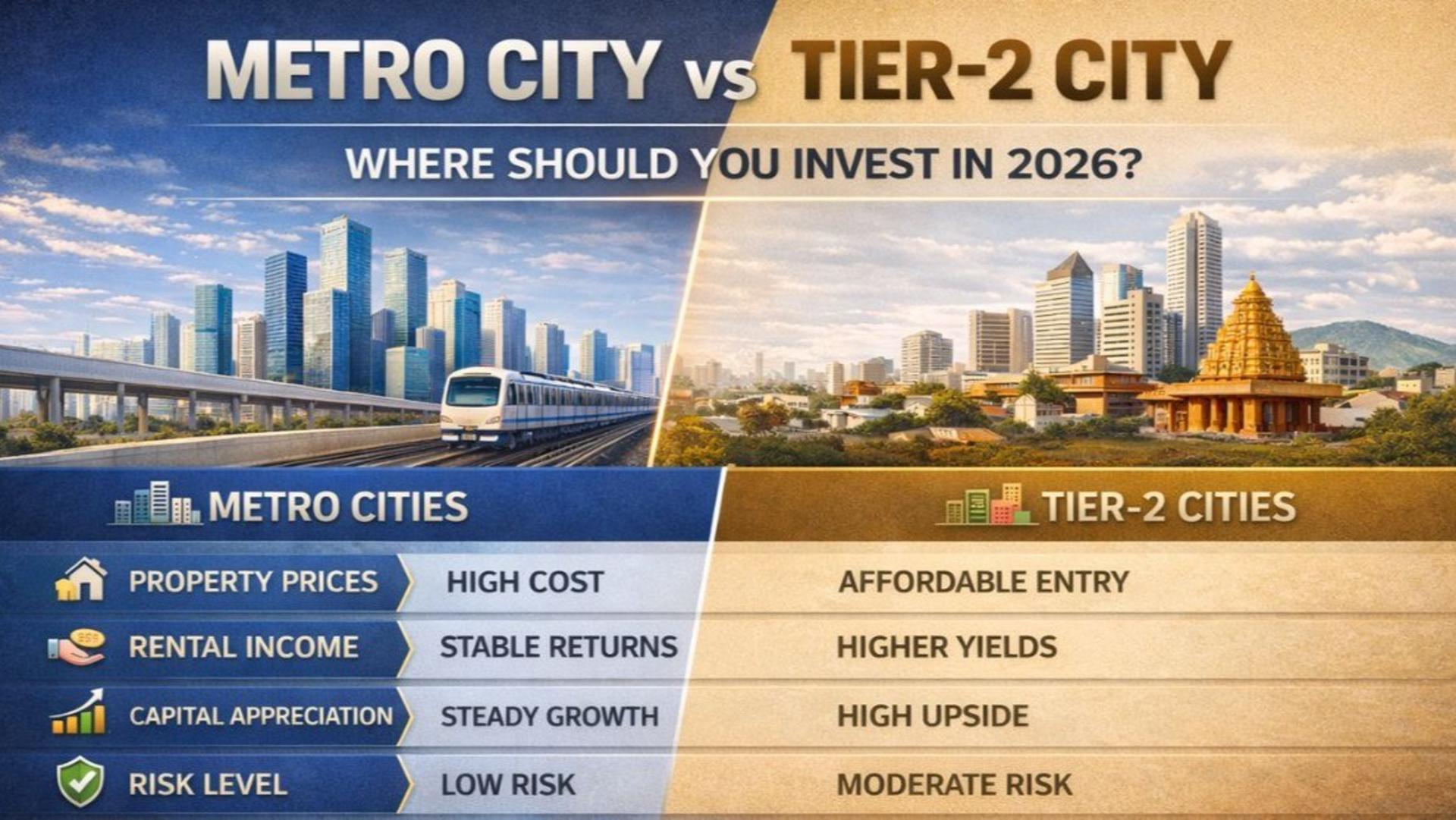
Choosing between a metro city vs Tier-2 city for real estate investment is one of the most important decisions for property buyers in 2026. With rapid infrastructure development, growing employment hubs, and changing buyer preferences, both metro city real estate investment and Tier-2 city real estate investment offer unique advantages.
If you are wondering “Where should you invest in 2026?” — this detailed comparison will help you understand which property market aligns with your investment goals.
What is Metro City Real Estate Investment?
Metro city real estate refers to property investment in large urban centers with strong economic activity and high population density.
Top metro cities for property investment in India include:
Bengaluru
Mumbai
Hyderabad
Chennai
Why Investors Prefer Metro City Property Investment
Strong job market in IT, finance, and corporate sectors
High rental demand from working professionals
Advanced infrastructure (metro rail, airports, IT corridors)
Better resale value and market liquidity
Metro city property investment is often considered a low-risk real estate investment strategy due to consistent rental income and stable capital appreciation.
What is Tier-2 City Real Estate Investment?
Tier-2 city real estate investment focuses on emerging cities with developing infrastructure and growing industries.
Popular Tier-2 cities for property investment include:
Mysuru
Coimbatore
Indore
Lucknow
Why Tier-2 City Property Investment is Growing
Affordable property prices
Higher rental yield potential
Rapid infrastructure development
Strong capital appreciation potential in growth corridors
Tier-2 city real estate investment is increasingly popular among first-time property buyers and investors seeking high-growth real estate markets.
Metro City vs Tier-2 City: Detailed Real Estate Investment Comparison
1. Property Prices in Metro vs Tier-2 Cities
Metro City Property Prices
High entry cost
Premium rates in prime locations
Higher investment capital required
Tier-2 City Property Prices
Affordable entry-level pricing
Larger homes within the same budget
Attractive for budget property investment
If you are planning affordable real estate investment in 2026, Tier-2 city property investment may offer better entry opportunities.
2. Rental Income & Rental Yield Comparison
Metro City Rental Market
Strong rental demand
Lower vacancy rates
Stable rental income
Rental yield moderate (due to high property value)
Tier-2 City Rental Market
Growing rental demand
Higher rental yield percentage possible
Rental performance depends on local employment growth
For stable rental income, metro city real estate investment is reliable.For higher rental yield percentage, Tier-2 city property investment can outperform.
3. Capital Appreciation in Metro vs Tier-2 Real Estate
Metro City Capital Appreciation
Steady and predictable price growth
Mature real estate market
Lower volatility
Tier-2 City Capital Appreciation
High appreciation potential
Fast growth in infrastructure-driven corridors
Early investors benefit the most
If your focus is long-term capital appreciation in real estate, investing in a developing Tier-2 city can deliver strong returns over 5–10 years.
4. Risk Level & Market Stability
Metro City Investment Risk
Lower risk
Strong resale demand
High liquidity in the property market
Tier-2 City Investment Risk
Moderate risk
Slower resale in certain micro-markets
Growth linked to economic development
Conservative real estate investors often prefer metro city property investment, while growth-oriented investors explore Tier-2 city real estate markets.
5. Infrastructure Impact on Property Investment
Infrastructure directly impacts real estate appreciation.
Metro Cities Offer
Operational metro rail systems
International airports
Established IT parks
Strong commercial hubs
Tier-2 Cities Offer
Smart City initiatives
New highways and industrial corridors
Expanding commercial zones
Rapid urban transformation
As infrastructure improves, Tier-2 city real estate investment becomes increasingly attractive.
Metro City vs Tier-2 City: Which Real Estate Investment is Better in 2026?
The answer depends on your investment strategy.
Choose Metro City Real Estate Investment if you want:
Stable rental income
Lower risk
High liquidity
Long-term wealth preservation
Choose Tier-2 City Real Estate Investment if you want:
Affordable property investment
Higher capital appreciation potential
Better rental yield percentage
Entry into emerging real estate markets
Smart Real Estate Investment Strategy for 2026
The smartest real estate investment strategy in 2026 is diversification.
Invest in a metro city for steady rental income and market stability.
Invest in a Tier-2 city for long-term capital growth and higher appreciation.
Balancing metro city property investment and Tier-2 city real estate investment can reduce risk and improve overall portfolio returns.
Conclusion
Both metro city real estate investment and Tier-2 city property investment offer strong opportunities in 2026. The key is selecting the right micro-location, understanding infrastructure growth, and aligning property investment with your financial goals.
If you are planning your next real estate investment, evaluate:
Budget
Risk tolerance
Rental income expectations
Capital appreciation goals
Infrastructure development plans
A well-researched decision in the right real estate market can generate strong returns for years to come.
Tags
RealHubb Editorial Team
Real Estate Expert · RealHubb Ventures
RealHubb Editorial Team is a seasoned real estate advisor at RealHubb, dedicated to helping families find their dream homes in Bangalore, Hyderabad, and Chennai.