


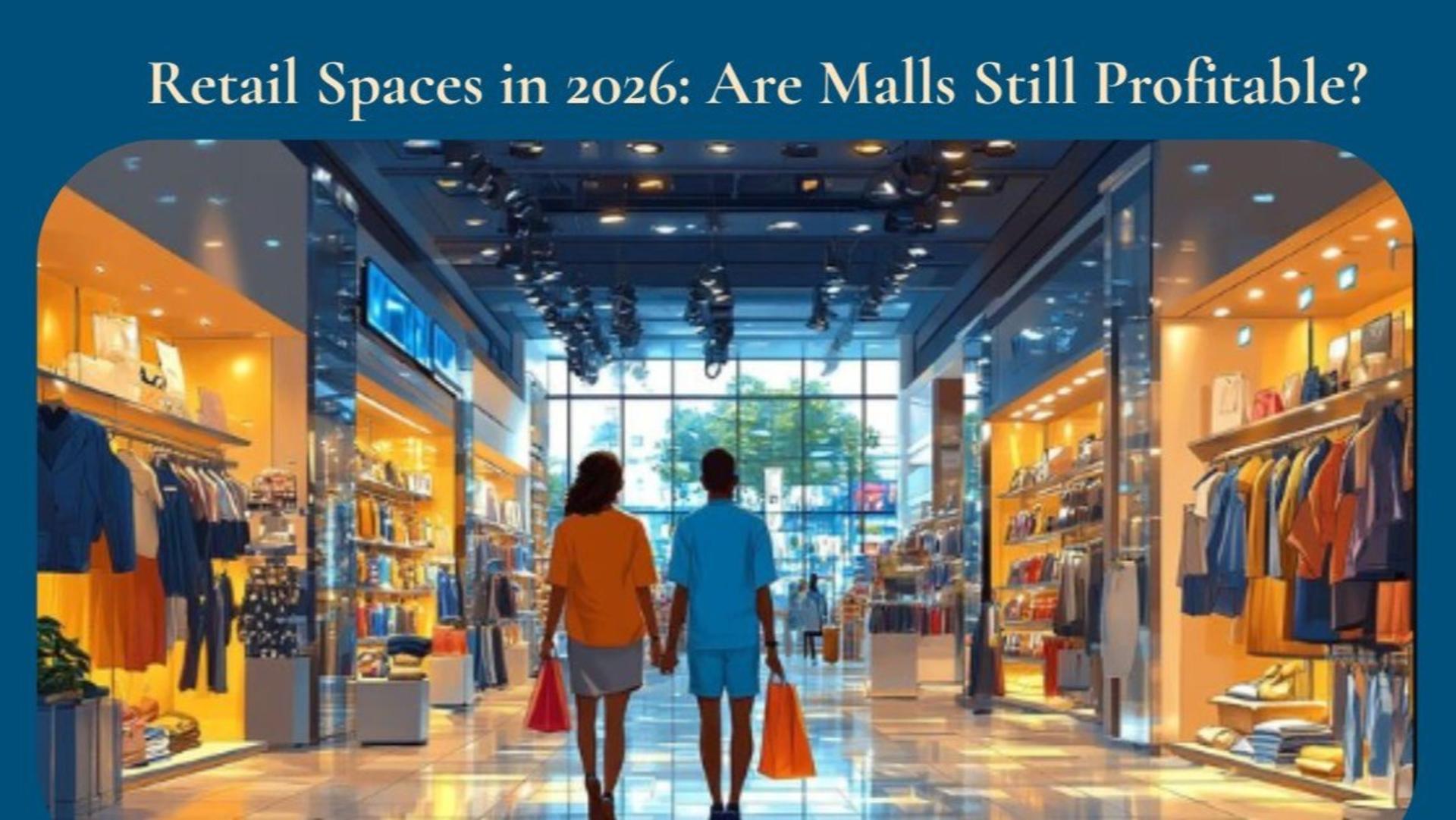
The retail real estate market is evolving rapidly, and one major question investors are asking in 2026 is: Are malls still profitable?
With the growth of online shopping and digital platforms, many predicted the decline of malls. However, retail spaces in 2026 are not disappearing — they are transforming. Today, malls are experience-driven lifestyle destinations that continue to generate strong returns in the right locations.
This blog explains the current state of retail real estate investment, mall profitability trends, and what makes commercial retail property profitable in 2026.
Retail Spaces in 2026: A New Era of Retail Real Estate
The rise of e-commerce platforms like Amazon and Flipkart has changed consumer behavior. Customers now value convenience and fast delivery.
But despite digital growth, retail spaces in 2026 remain profitable because physical retail offers something online platforms cannot — experience.
Modern malls now focus on:
Experience-driven retail
Entertainment zones
Food and beverage hubs
Community events
Brand engagement stores
This shift has strengthened mall profitability instead of weakening it.
Why Malls Are Still Profitable in 2026
1️⃣ Experience-Driven Retail Model
Retail spaces in 2026 focus heavily on experiences.
Global brands like Zara, H&M and Apple invest in flagship stores inside premium malls. These stores are not just sales outlets — they are brand experience centers.
Entertainment features such as:
Multiplex cinemas
Gaming zones
Live events
Premium dining
increase dwell time, which directly improves sales and rental income.
2️⃣ Strong Rental Yields in Prime Locations
One of the biggest reasons malls remain attractive is rental yield potential.
Premium commercial retail property in cities like Bangalore, Hyderabad, and Mumbai continues to show strong demand due to:
Growing urban population
Expanding IT sector
Rising disposable income
Metro connectivity
Retail spaces in high-footfall locations generate stable long-term income through:
Minimum Guaranteed Rent (MGR)
Revenue-sharing agreements
Annual rental escalation clauses
This makes retail real estate investment appealing for investors seeking passive income.
3️⃣ Anchor Tenants Drive Mall Profitability
Mall profitability heavily depends on anchor tenants.
Anchor tenants such as:
Hypermarkets
Supermarkets
Large fashion chains
Multiplex cinemas
drive consistent footfall.
A strong tenant mix ensures low vacancy rates and sustainable commercial retail returns.
High-Street Retail vs Malls in 2026
Another growing trend in retail real estate investment is high-street retail.
High-street retail offers:
Direct road visibility
Lower maintenance costs
Independent ownership
Flexible leasing
In some micro-markets, high-street retail spaces in 2026 are generating competitive rental yields compared to malls.
However, malls offer centralized management, entertainment integration, and stronger brand positioning. Both formats are profitable when chosen strategically.
Technology Boosting Retail Real Estate
Technology integration has strengthened mall profitability in 2026.
Modern retail spaces use:
AI-based footfall analytics
Smart parking systems
Omnichannel retail integration
Digital directories
Retailers combine online and offline models, known as “phygital retail,” to increase store visits and conversions.
This technology-driven approach keeps retail real estate competitive against e-commerce.
Risks in Retail Real Estate Investment
While retail spaces in 2026 are profitable, investors must evaluate risks such as:
Location oversupply
Weak tenant mix
Poor mall management
Rising operational costs
Economic slowdowns
Unlike residential property, commercial retail property requires deeper due diligence before investment.
What Makes Retail Spaces in 2026 Truly Profitable?
To ensure strong returns, investors should focus on:
Prime location with high catchment population
Established developer reputation
Strong anchor tenants
Balanced tenant mix
Integrated mixed-use developments
Sustainable building features
Retail spaces inside mixed-use townships or IT corridors tend to perform better due to built-in footfall.
Future of Mall Profitability Beyond 2026
The future of retail real estate is not about traditional shopping malls. It is about creating lifestyle ecosystems.
Successful malls will:
Focus on experiential retail
Host community events
Integrate technology
Provide premium entertainment
Offer sustainable infrastructure
Retail spaces in 2026 are evolving into social and lifestyle destinations rather than simple shopping centers.
Conclusion :- Are Malls Still Profitable?
Yes, malls are still profitable in 2026, especially premium, well-located, and professionally managed retail properties.
Retail real estate investment remains a strong opportunity for investors who understand:
Location dynamics
Tenant quality
Rental structure
Market demand
The retail sector is not declining — it is adapting. Investors who choose the right commercial retail property can continue to benefit from strong rental yields and long-term capital appreciation.
Keywords ➖
Retail spaces in 2026
Malls profitable in 2026
Retail real estate
Commercial retail investment
Mall profitability
Retail property investment
Tags
RealHubb Editorial Team
Real Estate Expert · RealHubb Ventures
RealHubb Editorial Team is a seasoned real estate advisor at RealHubb, dedicated to helping families find their dream homes in Bangalore, Hyderabad, and Chennai.