


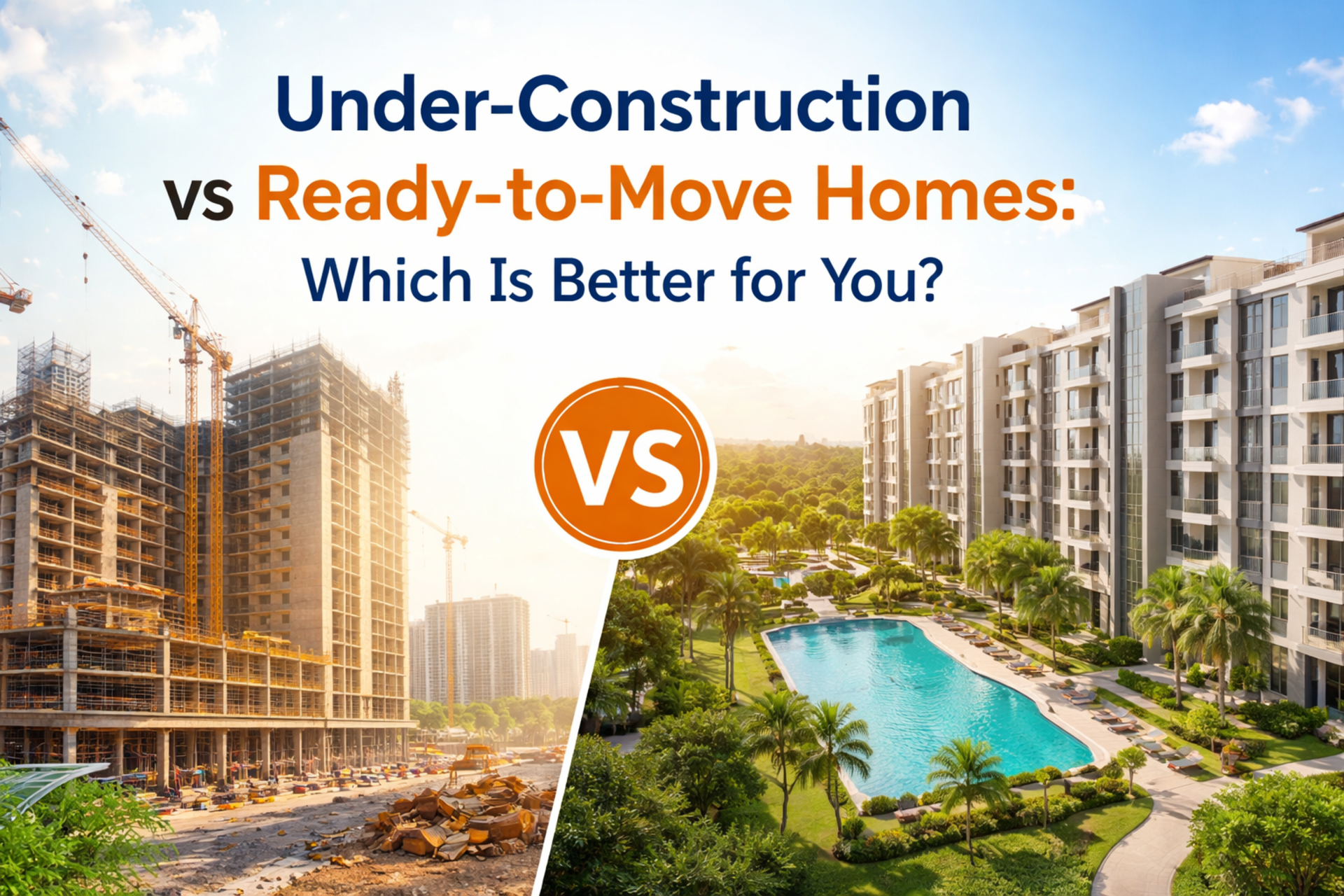
Choosing between an under-construction property and a ready-to-move home is one of the most common dilemmas for Indian homebuyers. Both options have distinct advantages, risks, and ideal use cases depending on your budget, risk appetite, and need for immediate housing in the real estate market.
What Is an Under-Construction Property?
An under-construction property is a home that is still being built and will be delivered at a future date as per the developer’s timeline.
These units are usually sold based on brochures, floor plans, sample flats, and project renders.
Real estate developers often attract buyers with launch prices, early-bird offers, and construction-linked payment plans.
Many buyers see under-construction projects as a way to enter better locations at relatively lower initial prices in the residential property market.
However, buyers must rely heavily on the reputation and track record of the builder.
Advantages of Under-Construction Homes
Under-construction properties offer several potential benefits for both end users and investors.
Lower entry price: Compared to completed homes in the same area, under-construction units are generally priced more affordably in the real estate sector.
Appreciation potential: As construction progresses and surrounding infrastructure develops, property value can rise, offering capital gains by the time the project is complete.
Modern designs and amenities: New projects often feature updated layouts, energy-efficient features, and lifestyle amenities such as clubhouses, gyms, landscaped gardens, and children’s play areas in modern residential projects.
These advantages make under-construction homes attractive for buyers planning for the medium to long term.
Risks and Challenges with Under-Construction Properties
Despite the benefits, there are important risks that buyers must evaluate carefully.
Possession delays: Project delays can force buyers to pay both rent and home loan EMIs for longer than expected.
Dependency on builder credibility: Since the property is not yet complete, buyers must trust the developer’s financial strength and delivery record in the real estate market.
No immediate rental income: Investors looking for quick cash flow may find under-construction assets less suitable in the property investment space.
To reduce risk, it is critical to choose RERA-registered projects from reputed developers with a history of timely completion.
What Is a Ready-to-Move Home?
A ready-to-move property is a fully constructed home with required approvals, where buyers can move in or rent out immediately after purchase.
These homes may be brand-new units in completed projects or resale properties in established neighborhoods.
Buyers can physically inspect the flat, building quality, amenities, and locality before finalizing the residential property purchase.
An Occupancy Certificate (OC) and other approvals are usually already in place in a compliant project.
This transparency and immediacy are the biggest attractions of ready-to-move homes in today’s real estate market.
Advantages of Ready-to-Move Properties
Ready-to-move homes are ideal for buyers who value certainty and immediacy.
Immediate possession: Buyers can move in quickly and avoid the double burden of rent plus EMI for long periods.
Clear visibility: You can see exactly what you are buying—layout, view, ventilation, and quality—before making payment in a real estate transaction.
Instant rental income: For investors, rent can start flowing as soon as the property is leased out, making it ideal for property investment.
Easier financing: Banks often consider completed, approved properties less risky, which can smoothen home loan processing.
These factors make ready-to-move options very popular among families with urgent housing needs.
Limitations of Ready-to-Move Homes
However, ready-to-move properties are not perfect for every buyer.
Higher prices: Since the project is complete and risk is lower, prices are generally higher than comparable under-construction options in the real estate sector.
Less customization: Scope for changing layouts, interiors, or specifications is limited compared to buying early in an under-construction project.
Possible renovation costs: Resale properties may require additional spending on repairs or upgrades.
Slower appreciation: Since much of the growth has already played out by completion, property appreciation may be more gradual.
Buyers must factor these aspects into their overall budget and return expectations.
How to Decide: Key Factors to Consider
To choose between under-construction and ready-to-move homes, align the decision with your personal and financial goals.
Budget: If you need a lower entry price and can wait, under-construction may fit better; if you can afford a premium for certainty, ready-to-move is attractive in the real estate market.
Urgency: For immediate housing or quick rental income, ready-to-move properties are the logical choice.
Risk tolerance: Under-construction homes carry higher delivery risk, while ready units have lower execution risk but a higher price.
Purpose: For long-term property investment and appreciation, early-stage under-construction in good locations can be rewarding; for self-use now, ready homes offer clarity and comfort.
In all cases, verify legal approvals, RERA registration, land titles, and builder reputation before committing to any residential property.
Conclusion
Under-construction and ready-to-move homes both have a place in a smart real estate strategy. By understanding their pros and cons and matching them with your timeline and risk appetite, you can choose the option that brings you closer to your dream home with confidence.
Tags
RealHubb Editorial Team
Real Estate Expert · RealHubb Ventures
RealHubb Editorial Team is a seasoned real estate advisor at RealHubb, dedicated to helping families find their dream homes in Bangalore, Hyderabad, and Chennai.